Why Were Older Condo Towers Less Affected by Interior Wall Damage? Unexpected Findings from the March 28, 2025 Earthquake
Following the March 28, 2025 earthquake in Bangkok (estimated 4.9 magnitude), we conducted in-depth assessments of multiple condo projects for our clients. The results were initially surprising but, upon closer analysis, made perfect sense: older condo towers (30+ years old) suffered significantly less interior wall and ceiling damage compared to newer high-rises (less than 10 years old).
Damage Comparison
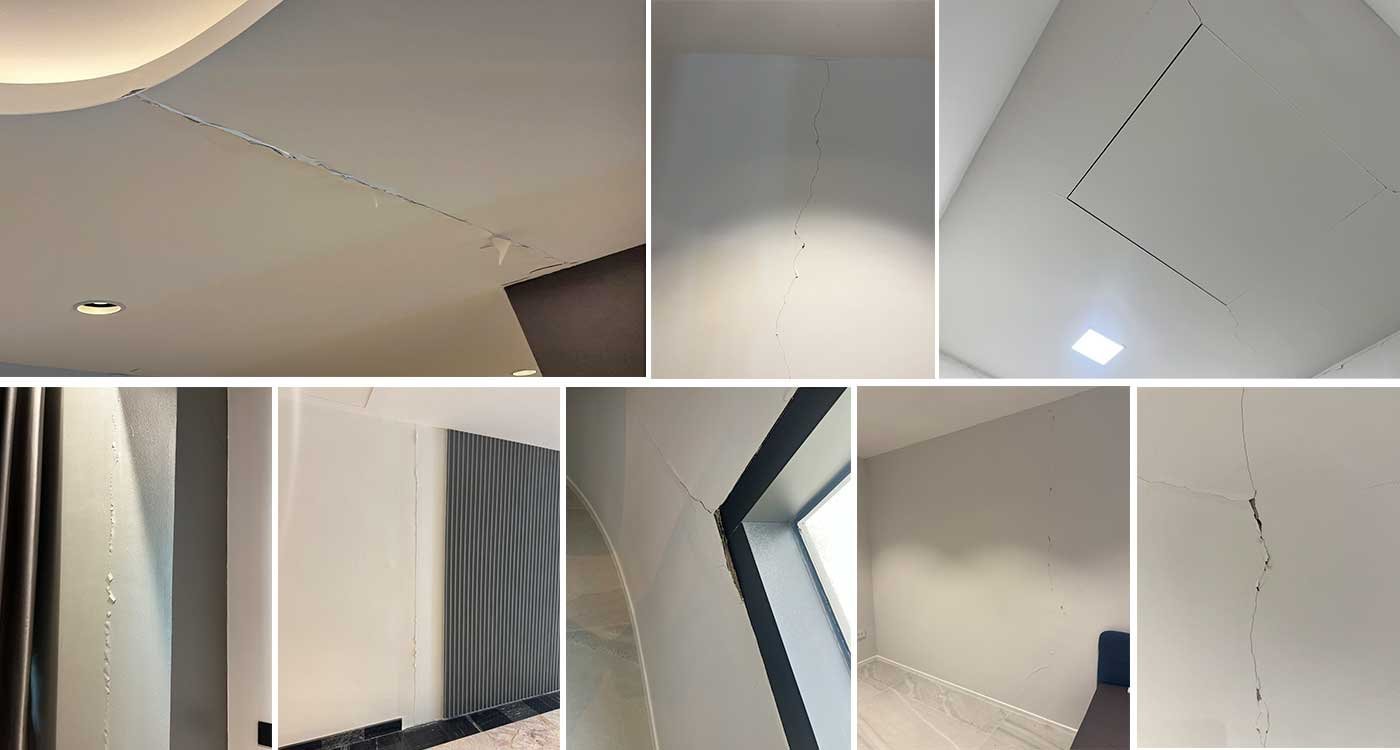
Older Condo Towers (30+ years old):
Hairline cracks in brick walls along the façade
Up to 5mm cracks in brick walls near structural columns
Minimal cracked wall tiles
No floor defects
No window cracks
Gypsum ceiling cracks along joints near structural columns/walls
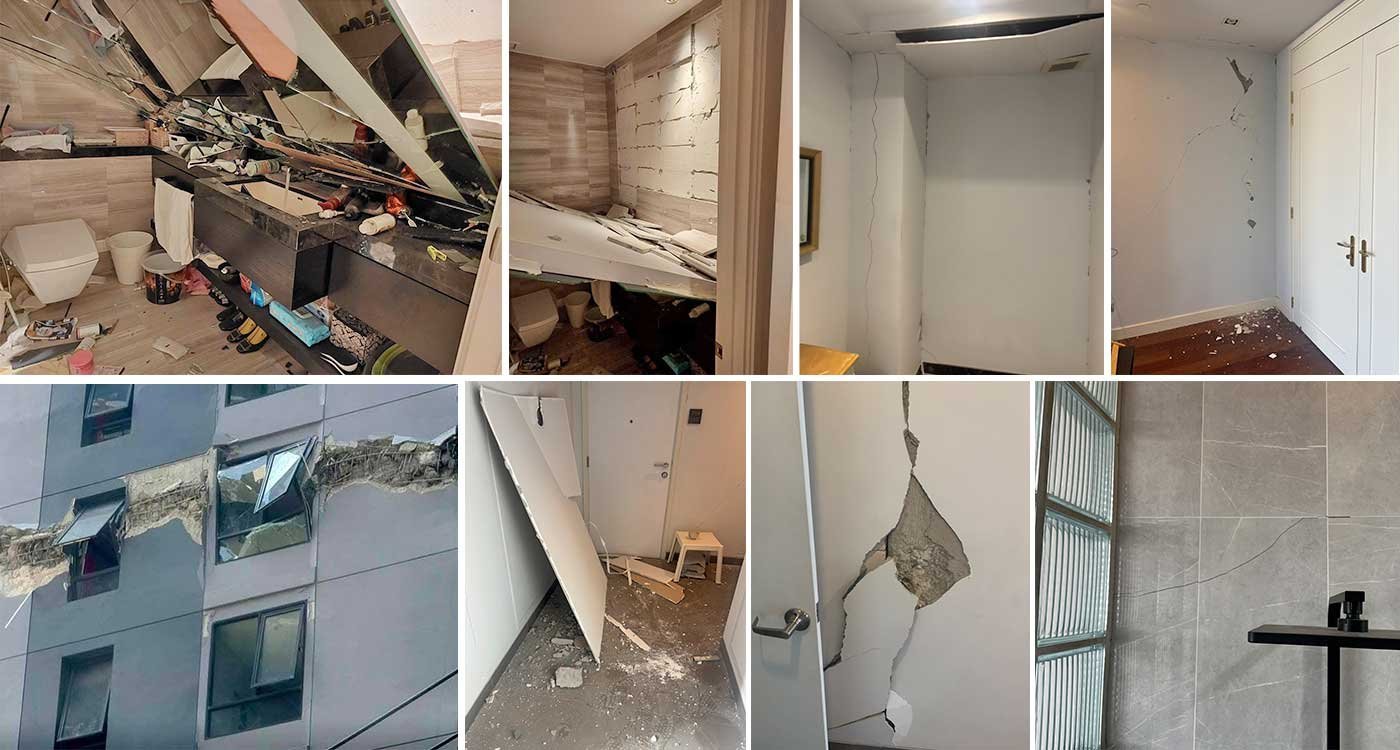
Newer Condo Towers (Less than 10 years old):
Chipped plaster
Cracked and chipped-off wall tiles
Cracked floor tiles
5–10mm cracks in brick walls
Fallen mirror cabinets
Warped door frames
Understanding the Difference: Rigid vs. Flexible Design
The structural philosophy behind older and newer buildings plays a major role in their earthquake resilience.
Older buildings were designed with thicker walls, heavier materials, and rigid structures, making them more resistant to minor seismic activity. Their simpler, symmetrical designs helped distribute forces evenly, reducing stress on non-structural elements like interior walls.
Newer buildings are engineered with controlled flexibility in mind, allowing for dynamic deformation to dissipate seismic energy. While this prevents catastrophic structural failure, it often leads to more visible interior wall and ceiling damage, as lighter materials like thin partition walls, gypsum board, and large glass façades absorb the movement differently.
The Theory Behind the Resilience of Older Condo Towers
A few key factors explain why older apartment skyscrapers outperformed newer condo towers during the relatively mild 2025 earthquake in Bangkok:
1. Conservative Design & Robust Materials
Older buildings were constructed with thicker reinforced concrete, heavier steel, and a simpler, more rigid framework.
These features allowed them to absorb and dissipate seismic energy more effectively without excessive deformation.
2. Simpler Structural Geometry
Traditional designs prioritized uniform mass distribution and fewer irregularities.
This reduced stress concentrations, which can be problematic in modern buildings with asymmetrical shapes or cantilevered sections.
3. Function Over Aesthetics
Older buildings were built for safety and longevity, with solid materials and straightforward designs.
Newer high-rises often emphasize maximizing floor space, open-plan layouts, and large glass facades, which, while visually striking, can make them more vulnerable to non-structural damage.
4. Evolution of Building Codes & Newer Design Trends
While modern building codes have improved, some new architectural trends push structural limits.
Features like slender profiles, high glass-to-wall ratios, and lightweight materials can increase flexibility but also make non-structural elements more prone to cracks and cosmetic damage.
Examples of old condo towers:
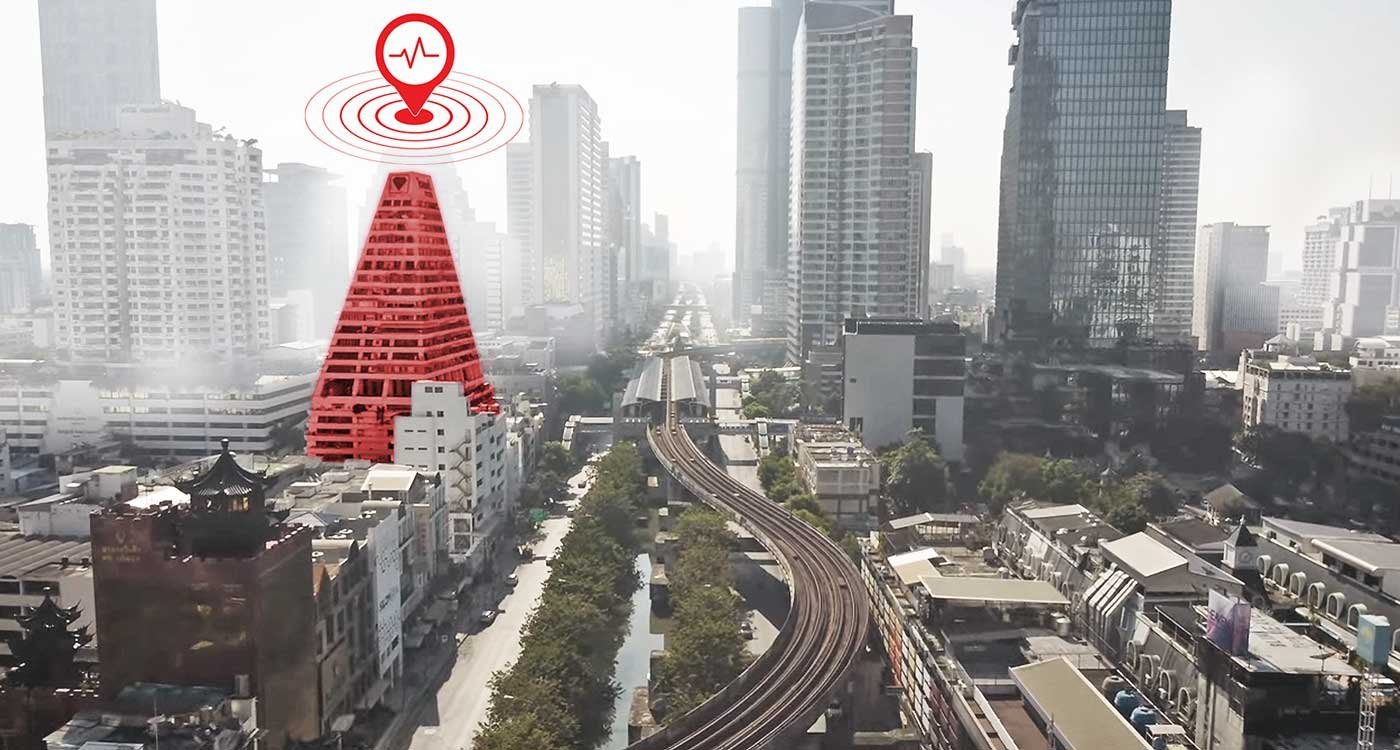
Diamond Tower – Bangkok’s Earthquake-Proof Pyramid In the heart of Bangkok, Diamond Tower stands as a testament to architectural resilience. This 20-floor pyramid-shaped skyscraper proved its strength during the 2025 Bangkok earthquake, emerging completely unscathed—no damages, no cracks, not even a scratch. With its unique structural design and solid engineering, Diamond Tower is one of the safe buildings in the city—a true fortress in the sky.
For Sale: A unique 129 sqm loft-style condo on the 17th floor is now available! Featuring breathtaking views over Mahanakhon Tower, this rare gem offers both style and security in the heart of Bangkok. THB 16.9M
more information: www.unique-loft.com











Originally published by regroup architecture. Reproduced for CondoGuru.